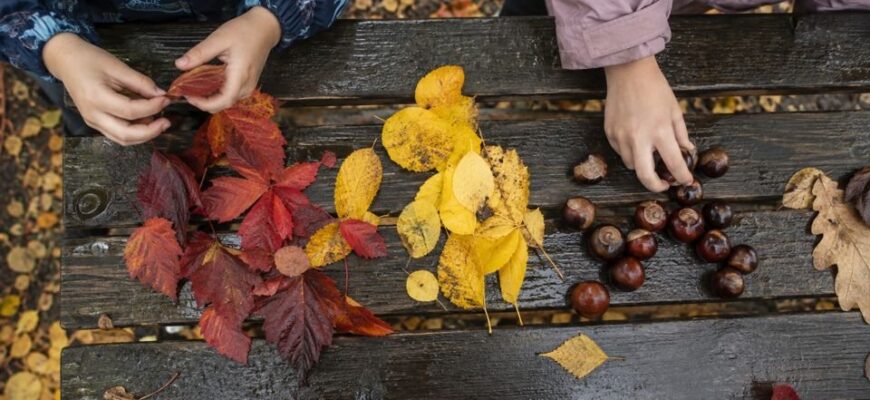
Fall provides a changing set of materials for learning: fallen leaves, seed pods, different light and familiar paths that look new. You can use these details for sorting, counting, storytelling and map-making without turning a walk into a formal lesson.
The ten fall learning activities below share one principle: give the child a clear action and room to explain a choice. Adapt materials to what is available locally. Use only safe objects, supervise younger children with small items, and wash hands after handling outdoor materials.
- 1. Sort leaves using a chosen rule
- 2. Make an autumn pattern
- 3. Play “what changed?”
- 4. Count and compare collections
- 5. Draw a map of an autumn route
- 6. Tell a three-part story
- 7. Describe an object with clues
- 8. Create a seasonal symbol code
- 9. Compare two observation drawings
- 10. Make a small discovery display
- FAQ
- What ages are these activities suitable for?
- What can we do when it rains?
- Do we need to complete all ten activities?
- How do I avoid making the walk feel like a test?
- Can siblings participate together?
- What should we keep as evidence of learning?
1. Sort leaves using a chosen rule
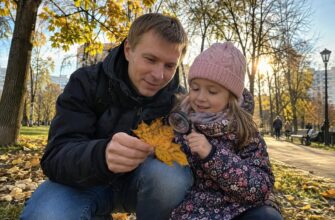
Collect a few fallen leaves where collection is allowed, or use photographs and paper drawings. Ask your child to choose a sorting rule: size, color, edge shape or another visible feature.
Place the leaves in groups and explain where one difficult example belongs. Then sort the same set using a different rule. Discuss how the groups changed even though the leaves stayed the same.
For an added challenge, use two conditions, such as small and yellow. Keep a group for examples that do not meet both conditions. Avoid insisting on perfectly distinct colors when the real leaves have mixed shades.
2. Make an autumn pattern
Use two types of material or picture cards to form a repeating sequence: leaf, seed pod, leaf, seed pod. Ask the child to continue it and describe the repeating unit.
Try a sequence with a longer unit, such as two leaves followed by one pod. Let your child create a pattern for you and check your attempt. State whether the sequence repeats or follows another rule so there is enough information to solve it.
A pattern can also use drawings or stamps indoors. The essential part is the relationship between items, not the authenticity of the outdoor materials.
3. Play “what changed?”
Arrange four or five distinct objects on a tray. Look at them together, then cover the tray while one item is removed or moved. Uncover it and ask what changed.
Start with a small set and keep the changes clear. Increase the challenge by changing a position rather than merely adding many objects. Take turns so the child also plans a change and checks your observation.
For more variations, explore memory games for ages 6–10. Keep the task playful and return to an easier version if the child becomes frustrated.
4. Count and compare collections
Make two small groups of leaves or safe counters. Ask which group has more and how to check. Line up objects in pairs so the unmatched ones show the difference.
Change the spacing without changing the number of objects. Discuss whether the quantity changed. A long, widely spaced row can look larger, so counting or matching provides a useful check.
Invent a small story: four leaves were collected, then three more were added. Model what happened before writing a calculation. Use numbers the child can understand rather than choosing a large total for its own sake.
5. Draw a map of an autumn route
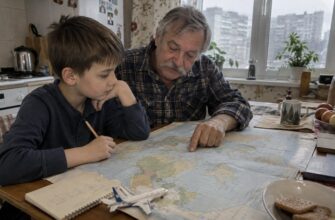
Choose a short, familiar route with an adult and note a few landmarks: a bench, a gate and a distinctive tree. Afterward, draw a simple map and add a legend.
Mark where you noticed a particular leaf or heard a sound. Explain that the drawing shows selected features and approximate locations. Do not include identifying personal information if you plan to share the map publicly.
Ask someone to describe the route using the drawing. If the map is unclear, improve one label or landmark. Geography activities for kids provide more ways to build on this idea.
6. Tell a three-part story
Choose three pictures or objects as story prompts. Ask the child to invent a beginning, a change and an ending. A leaf might become a character's boat, while a paper tree marks the setting.
Write down or record the story if the child wants to preserve it. Ask one clarifying question rather than rewriting the whole plot. The child's unusual idea is part of the activity.
For another round, keep the same prompts and change the ending. Discuss how the new ending connects to what happened earlier. This adds a reasoning task without requiring a longer story.
7. Describe an object with clues
Choose one item from a small visible collection and give clues about its features. “It has a jagged edge and a long stem” is more informative than “it is the one I like.”
Let the child ask a question before making a choice. Then switch roles. If several objects fit the clues, acknowledge the ambiguity and add a distinguishing feature.
This game practices both observation and clear description. You can use indoor objects or photos when weather makes an outdoor collection inconvenient.
8. Create a seasonal symbol code
Make a small key using simple drawings: a leaf means L, a circle means O and a triangle means G, for example. Add only the letters needed for a short message and keep the key visible.
Decode a message together, then let the child encode one for you. Check that each symbol keeps the same meaning. A key with a missing letter is an opportunity to revise the design rather than guess the intended message.
For fuller examples, try secret codes for kids. Use imaginary messages instead of real passwords or personal details.
9. Compare two observation drawings
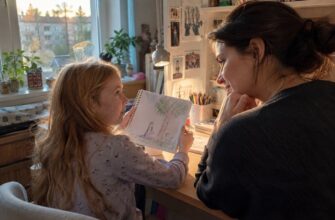
Draw a simple arrangement of autumn objects twice, changing one or two details in the second picture. Ask the child to locate the differences and describe them precisely.
The child can then create a pair for you. Agree on how many differences are included so the search has a clear endpoint. Distinguish intentional changes from small drawing variations that were not part of the puzzle.
You can use photographs of a tabletop arrangement as another version. Move a clear object between shots and check that the remaining setup stays consistent.
10. Make a small discovery display
Choose a few drawings, a map and a pattern from the week's activities. Let your child decide how to arrange them and write or dictate labels explaining what each piece shows.
Invite a family member to ask one question about the display. The child can demonstrate a sorting rule or explain how a map was improved. Keep the conversation focused on the work rather than on comparing it with another child's project.
Save a photo if you wish and ask what the child would like to investigate next. IQClass games can add a digital activity connected to that interest, while the display preserves examples of hands-on thinking.
FAQ
What ages are these activities suitable for?
Adapt the number of objects, instructions and reading demands. Younger children can sort or match with adult support; older children can design maps, explain two-condition rules or create more complex messages.
What can we do when it rains?
Use paper leaves, photographs, household objects or drawings. The activities depend on comparing, describing and reasoning, so real outdoor materials are optional.
Do we need to complete all ten activities?
No. Choose one that fits your child's interest and your available time. Repeating a familiar activity with a new rule can be more useful than rushing through the full list.
How do I avoid making the walk feel like a test?
Invite observation and follow one question that interests the child. Leave time for ordinary walking and play. You can draw or discuss the idea afterward instead of asking questions continuously.
Can siblings participate together?
Give different roles, such as collecting observations, drawing a map or explaining a rule. Adjust each task to the child and avoid turning the shared activity into a competition over speed.
What should we keep as evidence of learning?
Save a drawing, map or short explanation that shows a strategy. Later, compare it with another attempt and discuss what became clearer. A small collection is enough; you do not need to document every moment.