Teaching children to check their work means giving them a specific action after solving a problem. “Check again” often leaves a child unsure where to look or what to compare. They may repeat the same calculation, follow the same mistaken route and believe the work has now been checked.
A small set of methods is more useful: match the answer to the question, estimate its size, use an inverse operation or rebuild the situation with a model. No single method fits every task. Begin with one clear technique and explain the kind of mismatch it can reveal. The sequence below is designed for elementary-age practice at home.
- Step 1: return to the actual question
- Step 2: decide whether the size makes sense
- Step 3: use an inverse operation
- Step 4: show the result in another model
- Step 5: inspect conditions separately
- Create a short checking card
- Practice with invented mistakes
- Transfer responsibility gradually
- FAQ: independent checking habits
- Should children calculate everything twice?
- Why does an inverse check not prove a word problem is solved?
- What if my child waits for an adult to check?
- How should I respond to a self-corrected mistake?
- Can a calculator be part of checking?
- When should we remove the checklist?
Step 1: return to the actual question
First identify what needed to be found. A story describes five boxes containing four pencils each and asks for the total number of pencils. “Twenty boxes” has the correct numeral but the wrong unit. Ask your child to finish the sentence “I found the number of…” to reconnect the calculation with the situation.
Check the type of answer too. If a question asks how many minutes a walk lasted, 2:20 p.m. may identify its finishing time rather than its duration. If a task asks for every matching shape, naming one correct shape does not complete it. These checks examine the question without requiring the entire calculation to be repeated.
Step 2: decide whether the size makes sense
Before precise calculation, consider a reasonable range. For 48 + 31, the result should exceed forty-eight and be near eighty. Nineteen is immediately suspicious. For 73 − 28, the result should be below seventy-three because a positive amount is being subtracted. These comparisons do not establish the exact answer, but they can reveal a major mismatch.
Choose an estimate your child understands. Rounding 48 to 50 and 31 to 30 gives an estimate of 80; the exact answer, 79, is nearby. The estimate should not become another difficult written calculation. Its purpose is to provide a quick boundary or landmark against which the precise result can be compared.
Step 3: use an inverse operation
Check 62 − 27 = 35 by adding: 35 + 27 = 62. Reconstructing the starting number supports the arithmetic result. It does not establish that subtraction was the correct operation for the word problem. A perfectly consistent calculation can still answer a different question from the one the story asks.
For division without a remainder, multiplication provides a check: 24 ÷ 6 = 4 can be checked with 4 × 6 = 24. Once remainders have been taught, check the full relationship: dividend equals divisor times quotient plus remainder, and the remainder is smaller than the divisor. Introduce that form only when the quantities themselves are understood.
Step 4: show the result in another model
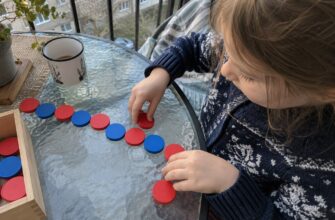
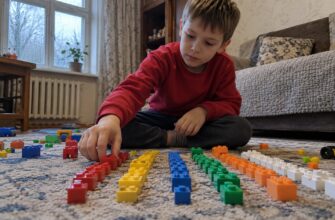
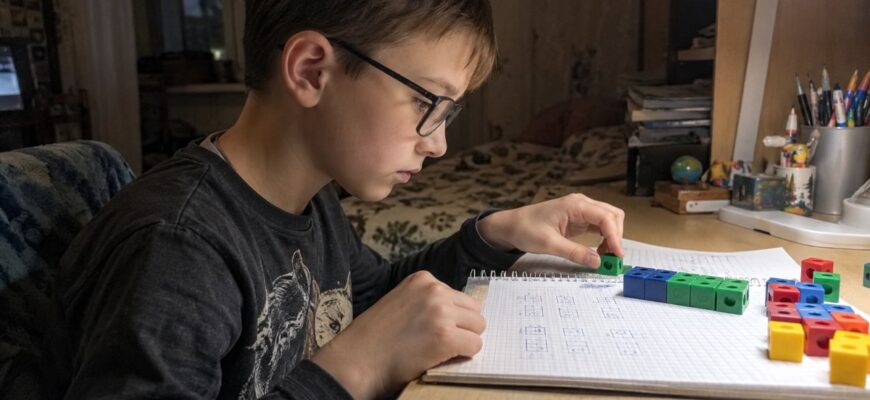
If a child solved with an expression, draw groups or a bar model. Three children with four tokens each can be represented by three groups of four, making twelve tokens. Four groups of three produce the same total but represent a different grouping story. Check both the numerical result and whether the model fits the situation.
Another method is to put a proposed answer back into the original condition. “Lena had some stickers; she received three more and then had eight.” Five passes the check because 5 + 3 = 8. Eleven does not. The proposed value must work inside the story rather than merely resemble a familiar answer.
Step 5: inspect conditions separately
A logic task may need no arithmetic check. Suppose the answer must be greater than ten, less than twenty and even. Sixteen passes three separate checks. Eighteen also fits if the task does not require a unique answer. It should not be rejected simply because an adult had sixteen in mind.
A route requires a different review: are the moves allowed, has a blocked square been crossed and does the path reach the target? A code puzzle requires checking the order of instructions. Start with the particular constraints. A broad instruction to “look carefully” does not tell a child which part of the task needs attention.
Create a short checking card
Use three questions: “Did I answer the question?”, “Which checking method fits?” and “What happened when I checked?” Model them on your own example first. Then leave the card beside your child's work. Later, the full sentences can become small symbols representing the question, method and result.
Avoid filling the card with every possible expectation about handwriting, posture, tidiness and behavior. If the current goal is checking an answer, a long list of unrelated reminders can hide it. When presentation requirements matter, keep those separate and review them after the mathematical meaning and result have been considered.
Practice with invented mistakes
Show a fictional learner's solution: “Two shelves hold six books each. The learner writes 2 + 6 = 8.” Ask for a model of the story before locating the mismatch. There are twelve books altogether. Discussing an invented error allows attention to the reasoning without evaluating your child's character or waiting for a personal mistake.
Try correct arithmetic with an incorrect label: “Five bags of three apples contain fifteen bags.” The number is right; the unit needs changing. Vary the error type so checking does not become a rule that every sample requires replacing addition with multiplication. Include fully correct solutions too, with an explanation of why they pass.
Transfer responsibility gradually
Begin by agreeing to check one selected problem. Allow time to use the card before you comment. Ask “What did you check, and how?” instead of “Are there mistakes?” When your child finds a mismatch, name the useful action: checking the unit, reconstructing the starting number or comparing every condition.
For practice, explore Logic and Mathematics, which includes inverse checks and numerical conditions. This guide to math word problems can help connect calculations to stories. Do not require a flawless first attempt: checking is valuable precisely because it offers a way to identify and repair specific difficulties.
FAQ: independent checking habits
Should children calculate everything twice?
Not necessarily. Repeating the same action may repeat the same error. Use a different suitable method: estimation, an inverse operation, a model or substitution. Explain what the chosen method checks and what it could miss, rather than treating a second calculation as an automatic guarantee.
Why does an inverse check not prove a word problem is solved?
It checks a numerical relationship, but the original operation may not match the question. A child could correctly add values when the task asks for a difference. Return separately to the story and identify what quantity the calculated number actually represents.
What if my child waits for an adult to check?
Start with one manageable responsibility and a visible reminder. Ask for a demonstration of the checking method before announcing whether the result is correct. Support remains available, while the adult gradually supplies fewer directions about where to look. Independence grows through small transfers of responsibility.
How should I respond to a self-corrected mistake?
Name the action that helped locate it and check the repaired solution together. Avoid “You finally noticed” or comparisons with another child. The purpose is to make review an ordinary part of working, rather than evidence that the original attempt deserves criticism.
Can a calculator be part of checking?
Sometimes, when the purpose is comparing a result or checking a more demanding calculation. It does not explain why an operation was chosen or whether the unit fits. Agree on calculator use when the task is specifically about learning a calculation method, and retain a check of the story's meaning.
When should we remove the checklist?
Look for suitable checking on several fresh tasks without constant reminders. Shorten the card first or leave it available by choice. Success on one familiar example does not establish that every kind of checking is now automatic. A new task type may still need a different reminder.