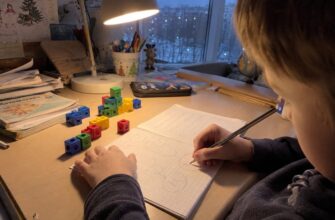
Sudoku for kids is a useful way to practice checking several conditions at once. A child does not need to calculate large numbers to start. In a beginner 4×4 puzzle, the symbols 1, 2, 3 and 4 simply identify four different possibilities.
The challenge is deciding which symbol fits a space while respecting the row, column and small box. Start with a puzzle that offers visible first steps, and ask the child to explain one choice. A completed grid matters less than understanding why a particular entry belongs there.
- Explain three rules with one small grid
- A first 4×4 sudoku to solve together
- Use “missing” before introducing candidates
- Candidate notes can reduce memory demands
- Make mistakes useful to inspect
- Adapt the puzzle without changing the rules
- Build a short puzzle routine
- FAQ
- Does sudoku require arithmetic?
- Is a 4×4 grid too easy for older children?
- Should children guess when stuck?
- Can we invent a sudoku ourselves?
- What if the child checks only rows?
- How long should one session last?
Explain three rules with one small grid
A 4×4 sudoku has four rows, four columns and four 2×2 boxes. Each row contains 1, 2, 3 and 4 once. Each column contains the same four numbers once. Each 2×2 box also contains all four once.
Show each type of group separately. Trace a row with your finger, then a column, then one box. Ask the child to point to those groups on a different square. This helps prevent a common misunderstanding: checking only the row because it is easiest to see.
The numbers already printed in the puzzle are clues and stay in place. The empty spaces are the ones to fill. If you make a handmade puzzle, distinguish fixed clues from pencil entries so the child can revise a trial without changing the original problem.
A first 4×4 sudoku to solve together
Use this puzzle, where dots are empty spaces:
1 2 | . 4
3 . | 1 2
----+----
2 1 | 4 .
. 3 | 2 1
Begin with the first row. It already contains 1, 2 and 4, so the missing number is 3. Before writing 3, check its column and its upper-right box. Neither already contains another 3. The entry fits all three rules.
In the second row, 3, 1 and 2 are present, so the empty space needs 4. Check the second column and upper-left box. In the third row, the missing number is 3. In the last row, it is 4. Again, check each entry beyond its row.
The finished grid is:
1 2 | 3 4
3 4 | 1 2
----+----
2 1 | 4 3
4 3 | 2 1
Read one column and one box together to confirm that each contains all four numbers. This puzzle is deliberately simple: every row gives a direct starting point. A first successful explanation creates a foundation for puzzles with fewer immediate clues.
Use “missing” before introducing candidates
Ask, “Which number is missing from this group?” A row with three different numbers leaves one clear possibility. The child can place four number cards beside the grid and remove the numbers already present to see what remains.
Next, offer a group with two empty spaces. Suppose the missing numbers are 2 and 4. You cannot choose their order from that group alone. Look at the intersecting columns and boxes. If one empty square's column already contains 2, that square cannot be 2, so it must be 4.
This is a reasoned elimination, not a guess. Say the reason aloud and invite the child to describe it in their own words. A short explanation is enough: “Two is already in this column.”
Candidate notes can reduce memory demands
In a harder puzzle, write possible numbers lightly in an empty square. A candidate belongs there only if it does not conflict with the square's row, column or box. Small number cards placed beside the grid can serve the same purpose.
Update the notes after a confirmed entry. If a 3 is placed in a row, remove 3 from candidate notes in the other empty squares of that row. Show the relationship instead of deleting marks without explanation.
Use candidate notes when they help, rather than insisting on them for every simple puzzle. A beginner with four nearly complete rows may find notes more complicated than the actual task. The strategy should reduce difficulty, not add a second worksheet.
Make mistakes useful to inspect
If a number is repeated, point to the affected group and ask the child to check it. Avoid replacing the entry immediately. The child can learn to identify the conflicting pair and trace how the choice was made.
Sometimes the latest visible mistake resulted from an earlier incorrect entry. Mark fixed clues clearly and review pencil entries in order. If the puzzle becomes confusing, return to the original version and rebuild the first few justified steps.
Praise the checking behavior specifically: “You looked at the column before filling that space.” This describes a repeatable action. Calling a child naturally brilliant or naturally bad at puzzles provides little guidance for the next attempt.
Adapt the puzzle without changing the rules
For a child who finds the grid unfamiliar, replace numbers with four distinct pictures or colors. Keep the same row, column and box constraints. Choose symbols that are easy to tell apart and avoid using two nearly identical shapes.
You can also cover unused parts while first explaining what a row is, then uncover the whole grid for actual solving. Do not leave parts hidden when the child needs to check an intersecting column or box.
Increase difficulty by reducing obvious entries gradually. Before moving to a 9×9 grid, check that the child understands how to combine constraints. A bigger grid creates more to track; it is not the only way to make reasoning deeper.
Build a short puzzle routine
Begin with one familiar example, solve a new puzzle together and finish by explaining a single choice. Let the child point to the relevant groups. If attention fades, save the grid and return later rather than requiring an arbitrary finishing time.
IQClass Sudoku Discovery offers another way to explore the format. Combine digital tasks with a paper grid so your child can discuss the same rule in a different setting. For a broader mix, explore logic games for ages 5–7.
FAQ
Does sudoku require arithmetic?
No. The symbols identify different entries; you do not add or multiply them. A picture sudoku can use the same logic, provided each group contains one of every symbol.
Is a 4×4 grid too easy for older children?
Difficulty depends on the clues and reasoning required, not just grid size. A small puzzle can be useful for learning a strategy or explaining why an entry is forced.
Should children guess when stuck?
For first lessons, choose puzzles with logical next steps and look for another group to inspect. If exploring a hypothesis later, label it clearly and track its consequences instead of treating it as certain.
Can we invent a sudoku ourselves?
Start from a valid completed grid and remove a few entries. Check that your intended puzzle has one solution before calling it a standard sudoku. Randomly deleting many clues can produce multiple solutions.
What if the child checks only rows?
Point to the selected square and ask which column and box it belongs to. Use a consistent three-part check. Practice identifying these groups before introducing more difficult clues.
How long should one session last?
Use engagement and the task as your guide. A brief session with one explained choice can be worthwhile. There is no need to finish a difficult grid while the child is tired or frustrated.