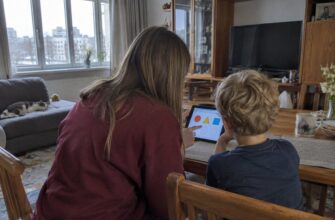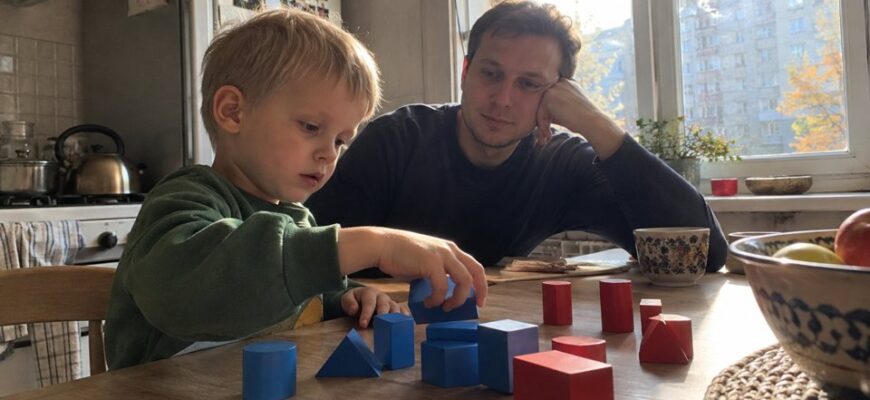
Logic games for kids work well when children can move, compare and test real objects. Blocks, toy animals and homemade picture cards give a young learner something concrete to reason about. The goal is to notice a rule and explain a choice, rather than race through a stack of questions.
These activities suit many children ages 5–7, but treat the age range as a starting point. Reading skills, experience and interests vary. Read the instructions aloud when you want to focus on reasoning, so unfamiliar words do not become an extra obstacle.
- What children actually practice
- Start with a manageable rule
- Five logic activities with clear examples
- 1. Continue the pattern
- 2. Explain the odd one out
- 3. Guess the collection
- 4. Follow the house clues
- 5. Put events in order
- A short home session
- Offer help in small steps
- Notice understanding beyond the score
- Extend the idea with IQClass
- FAQ: logic games for young children
- Do we need special workbooks?
- What if my child keeps guessing?
- Can we practice every day?
- Should children solve everything independently?
- Why can an odd-one-out puzzle have several answers?
- When is it time to make a game harder?
What children actually practice
Sorting involves choosing a feature and applying it consistently. A pattern activity asks a child to notice a repeating unit. A clue puzzle requires checking which options fit the information. Each task has a specific demand; a correct answer in one game does not measure a child's overall intelligence.
Ask about the process with a curious tone. “How did you decide?” can open a conversation. Repeating it sternly after every answer can feel like a test. Sometimes describe what you see instead: “You put all the round pieces together. Tell me about your rule.”
Start with a manageable rule
For a beginner, use one visible feature, such as color or shape. Offer six large pieces and two groups. Once that is comfortable, combine features: find the blue circles among shapes of several colors. Later, invite a second valid way to sort the same collection.
Change one thing at a time. Adding more pieces, a second rule and a time limit together makes it difficult to identify what caused a problem. If an activity feels frustrating, simplify the materials while keeping the basic idea.
Five logic activities with clear examples
1. Continue the pattern
Arrange a red block, a blue block, another red and another blue. Ask what comes next and why. Red follows if the agreed rule repeats the red–blue pair. Help your child point to the repeating part before adding a piece.
Next, try two reds followed by one blue. Leave a gap inside the pattern rather than only at the end. A child can check the neighboring groups to work out the missing item. Finally, let them design a pattern for you.
2. Explain the odd one out
Use pictures of an apple, pear, plum and carrot. The carrot is different if the group is fruit. A child might choose the plum because of its color. Ask which feature they used and whether it separates that item from all the others.
An open sorting question can have several reasonable answers. If you need one answer, state the condition explicitly: “Which picture is a vegetable?” Otherwise, judge the consistency of the explanation instead of expecting your private rule.
3. Guess the collection
Put several wooden objects in a box. Your child suggests an item that belongs with them. Ask what the examples have in common. Once the rule is clear, let the child build a new collection for you to identify.
Choose an observable feature. “Things I bought yesterday” is not a fair hidden rule unless the child has that information. The puzzle should be solvable from the evidence available to both players.
4. Follow the house clues
Draw red, blue and green houses. Give these clues: the rabbit lives in the red house; the fox lives in neither the red nor the green house; each animal has its own house. Where does the bear live?
The fox must live in the blue house, leaving green for the bear. Move toy animals into position, then explain which clue ruled out each alternative. Add only one new clue or animal when increasing the difficulty.
5. Put events in order
Use pictures of a seed, sprout and flower. Arrange them in a sensible sequence and discuss the changes between stages. Then deliberately put the flower before the seed and ask what needs explaining.
Everyday sequences work too: packing a bag, walking to the park and unpacking at home. Let children identify a missing step. Avoid requiring one rigid order where several real-life sequences could work.
A short home session
Give your child a couple of minutes to explore the materials. Explain one game, show an easy example and invite an independent attempt. After a few rounds, switch roles. Finish by discussing a useful strategy or a surprising answer.
Ten or fifteen minutes is one possible arrangement, not an age-based requirement. End earlier when the child is tired. If they want to continue, agree on another clear round so stopping does not become an unexpected interruption.
Offer help in small steps
First repeat the condition. Next, identify the known information together. Then remove one option that clearly cannot fit. If needed, model the method with a different example before returning the original puzzle to your child.
A leading hint such as “Look at the color” may reveal the central idea immediately. A more open prompt is “What is the same, and what is different?” Allow a pause before offering another hint. Adults often recognize a rule much faster than beginners.
Notice understanding beyond the score
Keep a few concrete observations: named the rule independently, found another classification, or spotted a contradiction. Try a new puzzle using the same idea a few days later. Fresh objects help distinguish understanding from remembering one familiar arrangement.
Compare your child's own attempts rather than their speed with a sibling's. Explaining a choice more clearly is useful progress, even if the number of completed cards stays the same. These notes help select the next activity.
Extend the idea with IQClass
Explore Logic Investigations and choose an activity that matches your child's current understanding. After a digital task, invite them to make a similar puzzle with toys. You can also try a separate thinking game.
Use a specific learning aim: explaining a rule, checking a clue or revising a guess. Avoid promising that a few games will raise IQ or improve every school subject. A clear, manageable aim makes the activity easier to discuss.
FAQ: logic games for young children
Do we need special workbooks?
No. Large blocks, familiar safe objects and paper are enough to begin. A workbook can save preparation time, but the quality of the conversation and clarity of the rule matter more than the product.
What if my child keeps guessing?
Reduce the choices and ask them to show a solution with objects. Discuss which clue supports the answer. If that is still difficult, model a similar example and return to the puzzle later without turning the guess into a criticism.
Can we practice every day?
You can offer short activities regularly when they remain enjoyable. Sorting toys or spotting patterns on a walk can provide the same kind of discussion. A separate formal lesson is not required every day.
Should children solve everything independently?
Adults can read the instructions, explain a word and organize the materials. Try to leave the main decision to the child. Gradually reduce help on familiar steps while staying available for questions.
Why can an odd-one-out puzzle have several answers?
An unspecified feature allows different classifications. Ask the child to state and check their rule. A puzzle with one intended answer needs clear restrictions that everyone can see.
When is it time to make a game harder?
Try an unfamiliar example using the same rule. If your child explains it without a hint and wants another challenge, change one parameter. Add a gap, another item or a second condition, rather than changing everything at once.