
Why is the course useful?
The skill of speed reading will help in study, everyday life and creativity

Increase the reading speed
Read more in less time

Learn the essence of what you read more easily
Understand the meaning in more depth and detail

Search the web faster
Learn to process large amounts of information efficiently

Expand your peripheral vision
Cover more readable text space

Pass exams and credits successfully
Learn new material faster

Be one step ahead
Read «Treasure Island» again with pleasure ;-)
Read at the speed of light. Or almost!

What is speed reading?
Speed reading is more than counting words. A reader needs to notice meaning, find useful information and explain what they have read. Begin with a text your child understands and can read confidently.
The course brings together games with letters, words, numbers and sequences. Word searches and anagrams offer different ways to attend to the material. These exercises complement reading books rather than replace it.
Explore speed reading practice for children: word search, attention to text and exercises. Try a reading comprehension example and plan a manageable practice routine.
Course program
Children are usually not fond of reading, so you need to force them. Do you agree with this statement? In part, it’s true. We, as responsible parents, want our children to read on their own. But they do not do this, although they were fascinated by books in their infanthood (remember the delight of your child when you were reading tales to them). This reluctance can be due to difficulty of perceiving information from texts and wrong reading technique.
Reading of one page of the book becomes a real torture? A child swallows the endings, changes the letters in places, distracts and loses the line? 5 minutes after classes the child no longer remembers what is written in the book? We know how to teach them to read quickly. IQClass speed reading course was developed for this purpose.
No need to hire a tutor. Program from IQClass aims at harmonious development and qualitative study of all aspects of reading - from concentration of attention to multiple increases in the speed of information reproduction. The child will enjoy interactive classes and understand that learning is fun, interesting and simple. Do you want to teach your children read any texts correctly and easily? Do not put off the thing - start classes with the IQClass now.

The course consists of 11 games
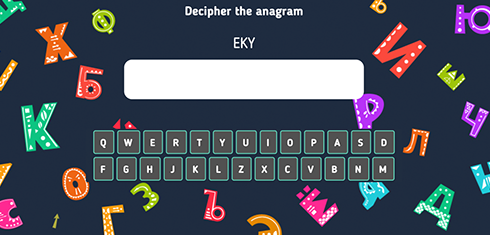
Anagrams - restart
A word appears in the playing field, in which all the letters are not in their places. You need to solve it and enter the answer in a special field. The quicker you type the right version, the better result you have.
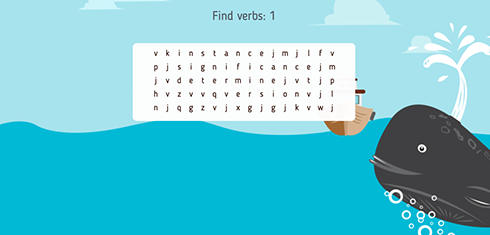
Hidden Words
The screen will show a large table of many cells with a separate letter in each. Verbs and nouns are hidden among them. To win, you need to find all the encrypted words.
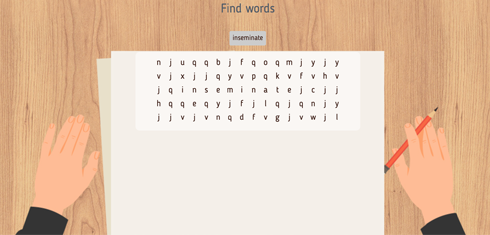
Find all the words
A text will appear before your eyes, and a few words on top. To win, you need to find all the words in the text.
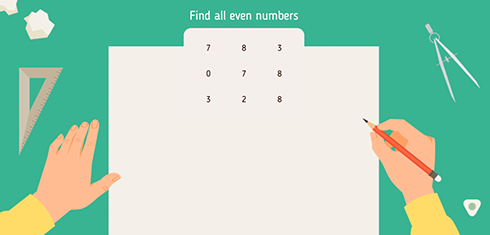
Even and Odd
Each level of the game is a field consisting of even and odd numbers. All numbers are scattered in chaotic order. To pass the round, you need to select all the numbers indicated in the task.
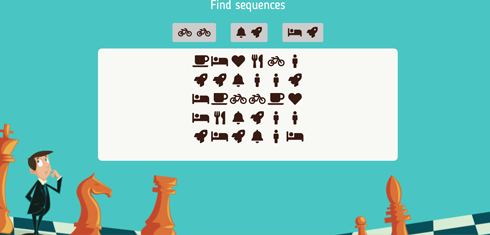
Find the sequence
A kind of table, consisting of figures appears on the playing field. Above it will appear sequences that should be found among all the pictures shown.

And other games
Before the beginning of classes your child will have to pass a special test, which will show how well the skill of speed reading is developed. Next, we will create an individual training program within the course. After a month of training the system will display the statistics with the results.
Start trainingCourse structure:
You get not just a theory, but a complex system to develop the skill of speed reading.
7 lessons
Interesting theory
11 games
Unique author’s developments
Introductory and final tests
To assess current level and results
Adaptive Program
Daily workout will adapt to the child’s progress





Give your child the key to the world of knowledge - start with IQClass speed reading courses
Start trainingReading speed begins with understanding
Speed reading is more than counting words. A reader needs to notice meaning, find useful information and explain what they have read. Begin with a text your child understands and can read confidently.
The course brings together games with letters, words, numbers and sequences. Word searches and anagrams offer different ways to attend to the material. These exercises complement reading books rather than replace it.
How to practise reading at home
After an exercise, ask one content question: who acted, what changed or why did it happen? Slow down if rushing obscures the meaning. During a second reading, look for the answer to one specific question.
Compare your child’s practice with their own earlier attempts. Read varied short texts and discuss unfamiliar words. There is no single promised speed or result within a fixed number of days.
Read and find the important detail
Emma planted a bean in a small pot. Every day she watered the soil. When the first shoot appeared, Emma put the pot on the windowsill so the plant would have enough light.
Where was the pot placed after the shoot appeared?
Answer and explanation
The text states that the pot was placed on the windowsill so the plant would have enough light.
This is a separate page example, with no timer, registration or saved profile result. Course games have their own rules.
Frequently asked questions: Speed reading
Is the course suitable for a child who is just learning to read?
Word exercises require a child to recognise letters confidently and understand short instructions. If reading is still difficult, practise ordinary reading together first and choose manageable exercises.
How does speed reading differ from finding words quickly?
Word search is a specific exercise in attending to text. Reading also requires understanding meaning and connections. Follow a quick search by explaining a sentence or answering a question.
Can an increase in reading speed be guaranteed?
No. Pace depends on reading skills, text difficulty and practice. Consider speed, accuracy and understanding together; a fast answer alone does not demonstrate comprehension.
How do we start?
Read the description and try the example below. The start button takes you to registration or course activation in your account. Access conditions are shown before starting the course.
How long should a practice session last?
Begin with one short exercise and watch how your child feels. Leave time to discuss the rule and a mistake. Manageable regular practice is more useful than rushing; there is no mandatory session length for every child.
Does a child need an adult’s help?
At first, read the instructions together and ask your child to explain the rule in their own words. Help with the controls while letting the child choose the answer. Take a break if the exercises become tiring.