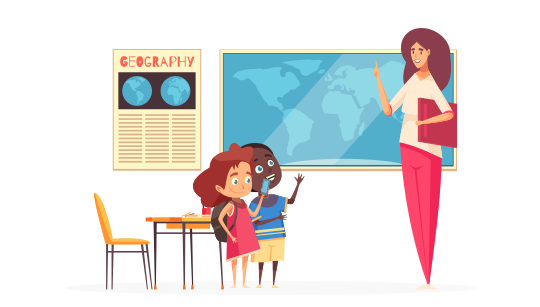
 Explore new places
 Celebrate the small wins
See how far they have come
Stars, course progress and certificates for completed programs make each step visible.
A tricky puzzle. A distant planet. A clever chess move. Turn “What if?” into “I figured it out!” with courses, activities and games kids can explore at their own pace.
Start with something they love. See where it takes them.
From numbers and patterns to animals, outer space and that very first checkmate.


A clear path from a new idea to a solution they can explain.
Choose a topic and see what is inside the course.
Explore an explanation, a picture and an example.

Compare, choose, solve and look for patterns.
Check the answer and revisit the tricky parts.
Progress stays in their profile, so the next adventure can pick up where the last one ended.
Celebrate the small winsStars, course progress and certificates for completed programs make each step visible.
 My World
A pet, a cozy room and a place they can make their own between learning adventures.
 Time for a game break
Try games centered on memory, attention and thinking. Pick a favorite or explore something new.
Browse the games →
Follow your child’s interests. Open a course, browse its topics and try an introductory lesson. Math courses have separate age recommendations for ages 5–7, 8–10 and 11–13. These are starting points, rather than grade placements.
Course pages include sample activities. A learner profile is needed to save answers and course progress.
It depends on their age and reading skills. A grown-up can read a question, explain an unfamiliar word or talk through a solution. Give them space to make their own attempt.
Courses have a sequence of topics, explanations and related activities. Games are separate challenges centered on memory, attention and thinking. You can explore both.
Courses include free introductory lessons. Additional lessons require Premium; each course page shows its access options.
Courses, games and learner profiles are currently available in English.